Detecting after storms and erosion: reading cuts, scallops, and black sand
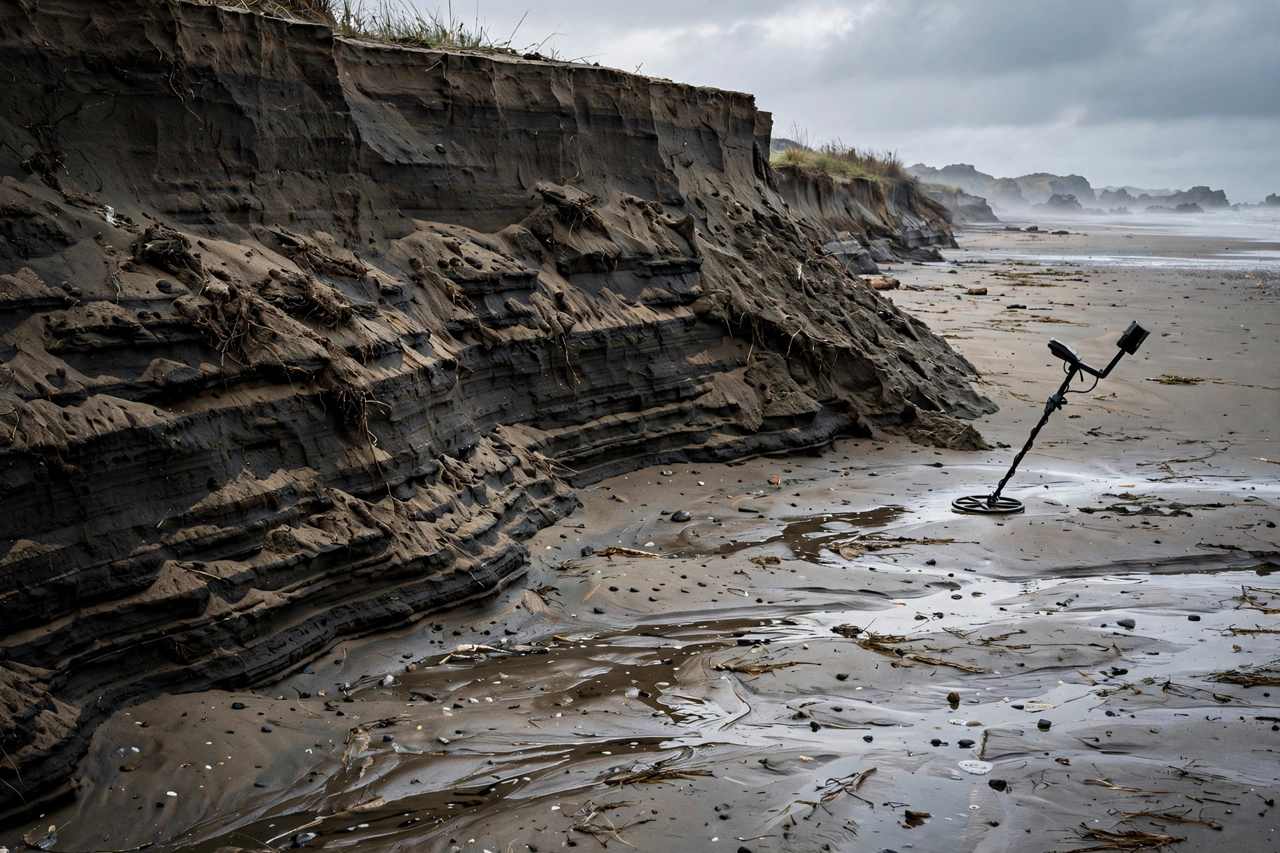
A hard storm rewrites a beach overnight. Sand that sat a metre deep over last decade's losses is pulled seaward, the profile drops, and a dark, older layer shows in the cut face like the rings of a tree. That exposed layer is the opportunity: dense metal sinks and settles over years of tidal sorting, so the newly uncovered stratum holds a concentration that the soft surface sand above it never did. The window is short. Fair weather waves start returning the sand within days, and every other detectorist in the county has read the same forecast. What follows is the order of work: ground first, clock second, coil third.
First decision: is the ground worth the trip
Not every storm improves a beach. Sand can move onto a beach as easily as off it, and a beach that has gained sand has buried its targets deeper, not exposed them. The productive signs are all about removal: a visible erosion cut with a vertical or undercut face, scalloped depressions along the waterline, exposed dark or coarse sediment under the surface sand, gravel patches, and shell lines. A greyish or black cast in the exposed sand signals mineralization and older layers, which is where the settled, denser finds concentrate. Flat, smooth, freshly groomed looking sand after a storm usually means deposition, and the honest call is to drive to the next beach rather than sweep buried targets at twice their normal depth.
Read the ground before the first swing
Walk the beach once without detecting. Mark the cut faces, the scallops, the troughs and low spots where water drains, and any line of shells or gravel. Storms and tidal pullback concentrate targets in exactly those low places, because moving water drops its heaviest load where it slows. Note where the black sand shows; that mineralized layer will also be the ground your detector complains about, so expect to re check your ground balance there rather than in the clean sand above it. This ten minute walk decides where the next two hours go, and it is the step most often skipped by hunters who start swinging at the access path.
Work the clock: 48 hours and the low tide window
- Aim to hunt within about 48 hours of the storm. After that, returning sand and other hunters erode the advantage.
- Arrive about three hours before low tide and follow the water down, so the widest strip of exposed beach is in front of you as the tide falls.
- Spend the best of the window, roughly the two hours around low tide, on the cuts and scallops you marked, where erosion has exposed items that sat up to about seven feet deep in the old profile.
- Success looks like this: you finish the falling tide with the marked zones covered at a slow, overlapping pace, rather than a fast pass over the whole beach.
Sweep pattern for eroded ground
Slow down and overlap. In the concentration zones, sweep slowly with about half of each pass overlapping the last, keeping the coil low and level, an inch or two above the sand. Work the mid beach tidal zone deliberately; wave action settles heavier objects there. When a good target comes up, stop treating the beach as a line and treat it as a cluster: use the find as a centre point and spiral outward with overlapping passes, because targets that settled together tend to sit together. Weak, broken signals in black sand deserve a second pass from a different angle before they are written off as mineralization.
The same reading, off the beach
Freshwater shorelines, creek banks, and field edges after a flood follow the same physics with different scenery. Moving water still sorts by weight, still cuts banks, and still drops its load where it slows: on the inside of a bend, below a washed out bank face, in the gravel line a flood leaves behind. Read those places the way you read a beach: look for the cut, the coarse layer, and the low pocket, and be honest about the differences. There is no tide window inland, banks undercut by floodwater can collapse, and permission and local rules still govern every site, storm or no storm. Check the ground is stable and the site is legal before the coil comes out of the car.
Set the machine up for the layer you are standing on
Exposed older layers are rarely polite ground. Black sand is mineralized, wet salt sand conducts, and a detector balanced for the clean dry sand at the top of the beach can chatter and lose depth in the cut where the finds actually are. The working response is procedural, not a magic setting. Re check your ground balance when you step from dry sand into the exposed layer, and again if the machine starts falsing for no other visible reason. Slow the sweep down further in the worst of it, because a fast swing over mineralized ground smears weak signals into the noise. Treat unstable readings as information about the ground first and about targets second: a stretch of beach that will not settle is telling you the layer changed, and the correct move is to rebalance and shorten the passes, not to raise sensitivity and hope. Hunters who keep a small test target in a pocket can drop it on the exposed layer and confirm the machine still reads it cleanly at a sensible depth before trusting an hour of quiet ground.
— Tom Reilly, Home & DIY Writer